
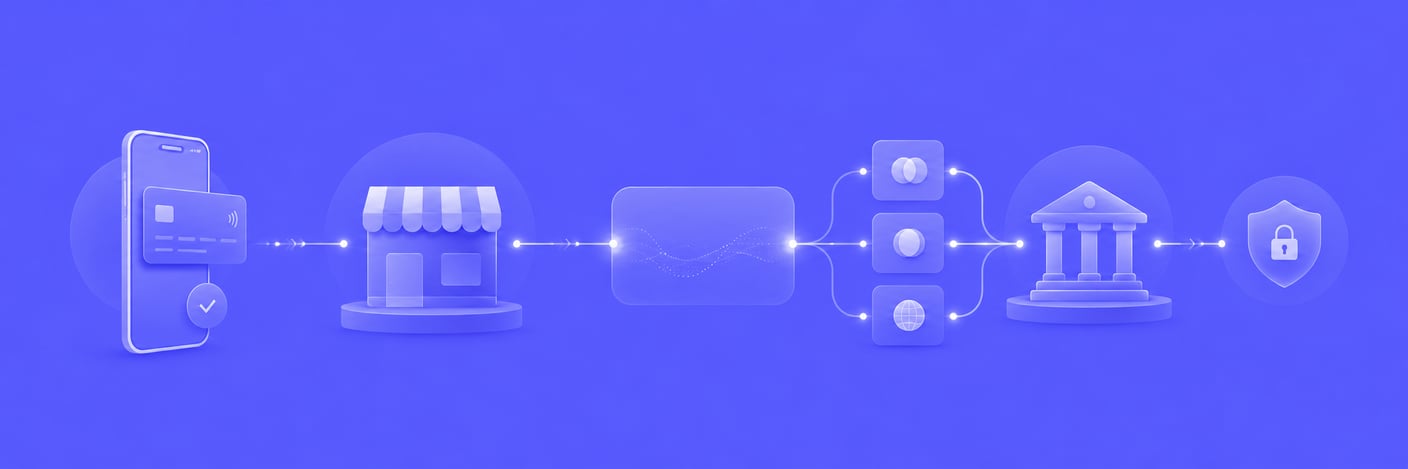

Payment service providers facilitate payment transactions, whetheronline,in-store or omnichannel. At the front end, i.e. what the customer sees, of an online store (or at the checkout), a payment service provider arranges for customers to choose thepayment methods of their preference, and they deal with entering the payment details. On the back end, a PSP works with merchants, payment platforms, payment methods, card networks and banks to ensure that the purchase amount actually goes from A to B - that is, from a customer to a merchant's bank account.

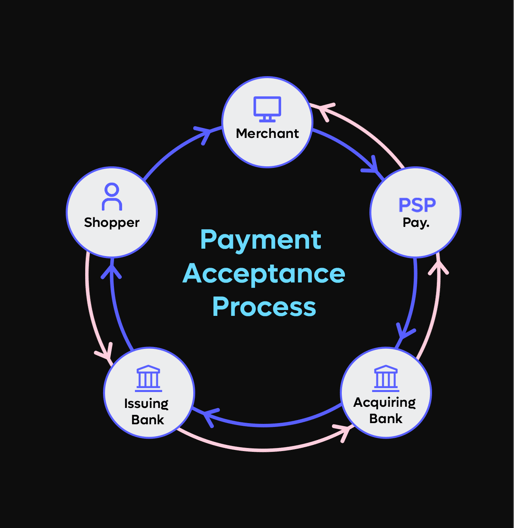
Payment processing varies by payment method - for example, processing a credit card transaction viaVisa or Mastercard is very different from processing a payment viaiDEAL or Klarna, for example. In any case, the transaction begins when the paying customer's payment details are retrieved and sent to the payment service provider. For credit card transactions, the most common payment method in e-commerce, we distinguish the following steps below:
1. Verification
The Issuing Bank, that is, the buyer's bank, verifies that the payment details are valid and that there are sufficient funds in the bank account or card to process the payment, including through the CVV or CVC, for example.
2. Authorization
If everything checks out, the payment service provider authorizes the payment. This is one of the most important steps in the transaction. If the transaction is approved, the amount is caught or reserved for the merchant in the customer's payment funds. This process takes only a few seconds.
3. Settlement
Once the transaction is authorized, fees are charged to process the payment, and it is processed. The selling party's bank then receives the funds, and deposits them into the merchant's bank account.

Any party providing payment services must comply with national and sometimes international regulations. To ensure secure processing of sensitive payment and consumer data, for example, certificates such as PCI-DSS, GDPR and ISAE 3402 have been created.
PSPs' fees vary. They are sometimes based on single transactions, but more often on volume packages and percentages of the purchase amount. Which package is best suited will always be discussed during startup.